


Atopica® for Cats (cyclosporine oral solution) USP MODIFIED
Break the itch-lick-scratch cycle without steroids. Atopica for Cats is the first and only FDA-approved product for the control of feline allergic dermatitis.
Help your patients with feline allergic dermatitis relax with the proven comfort of Atopica for Cats. Contact your distributor to order.
Why choose Atopica for Cats?
Many pet owners prefer an alternative to steroids.1 Atopica features a unique mode of action that inhibits the production of inflammatory cytokines without steroids.
 Proven
Proven efficacy against allergic dermatitis in cats
 Easy
EasyEasy-to-dose administration
 Long-term
Long-term control without glucocorticoids
 Rated
RatedHighly rated by cat owners1
Important information about Atopica for Cats

Atopica for Cats is indicated for the control of feline allergic dermatitis.
Cyclosporine oral solution
Oral liquid
Atopica for Cats Dosing Table
| Single Daily Dose - Minimum 4 to 6 weeks (or until resolution of clinical signs) |
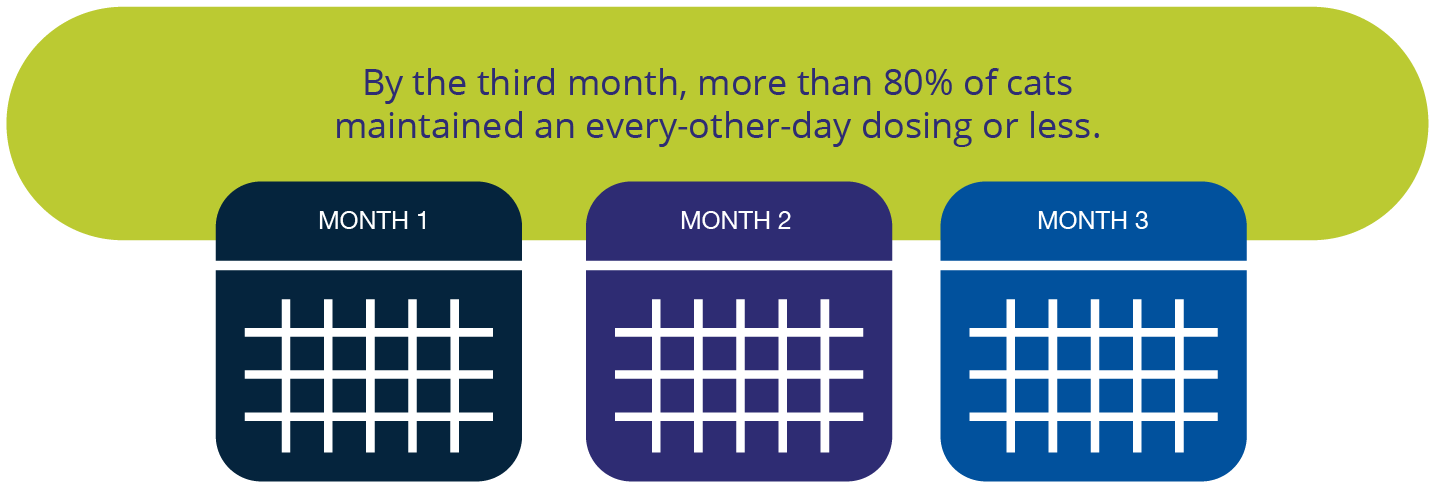
| Following Initial Treatment - Atopica for Cats may be tapered by decreasing the frequency of dosing to every other day or twice weekly to maintain the desired therapeutic effect. |
| Single Daily Dose | Following Initial Treatment |
|---|---|
| Minimum 4 to 6 weeks (or until resolution of clinical signs) | Atopica for Cats may be tapered by decreasing the frequency of dosing to every other day or twice weekly to maintain the desired therapeutic effect. |
Easy-to-dose administration in cats
• Atopica for Cats can be administered in food or directly into the mouth just after feeding.
• In clinical trials, 98% of cats were able to be dosed.2
• Atopica for Cats won the Easy to Give Award by International Cat Care, 2012.
Break the cycle. Give them relief from feline allergic dermatitis with Atopica for Cats.
Available through most distributors. Contact your Elanco sales representative for further information.





Indication
Atopica for Cats (cyclosporine oral solution) USP MODIFIED is indicated for the control of feline allergic dermatitis as manifested by excoriations (including facial and neck), miliary dermatitis, eosinophilic plaques, and self-induced alopecia in cats at least 6 months of age and at least 3 lbs. in body weight.
Important Safety Information
Do not use in cats with a history or suspicion of malignant disorders, feline leukemia virus (FeLV) or feline immunodeficiency virus (FIV) infection, or hypersensitivity to cyclosporine. Atopica is a systemic immunosuppressant that may increase susceptibility to infection, development of neoplasia, and decrease response to vaccination. Persistent, progressive weight loss may result in hepatic lipidosis; monitoring of body weight is recommended. For use only in cats. Wash hands after administration. People with known hypersensitivity should avoid contact with Atopica. Do not use with other immunosuppressive agents. It is important for cats to avoid exposure to Toxoplasma gondii during treatment. Use with caution in cats with diabetes mellitus or renal insufficiency, and with drugs that affect the P-450 enzyme system. The most common adverse events were vomiting, weight loss, diarrhea or loss of appetite. For full prescribing information, see package label.